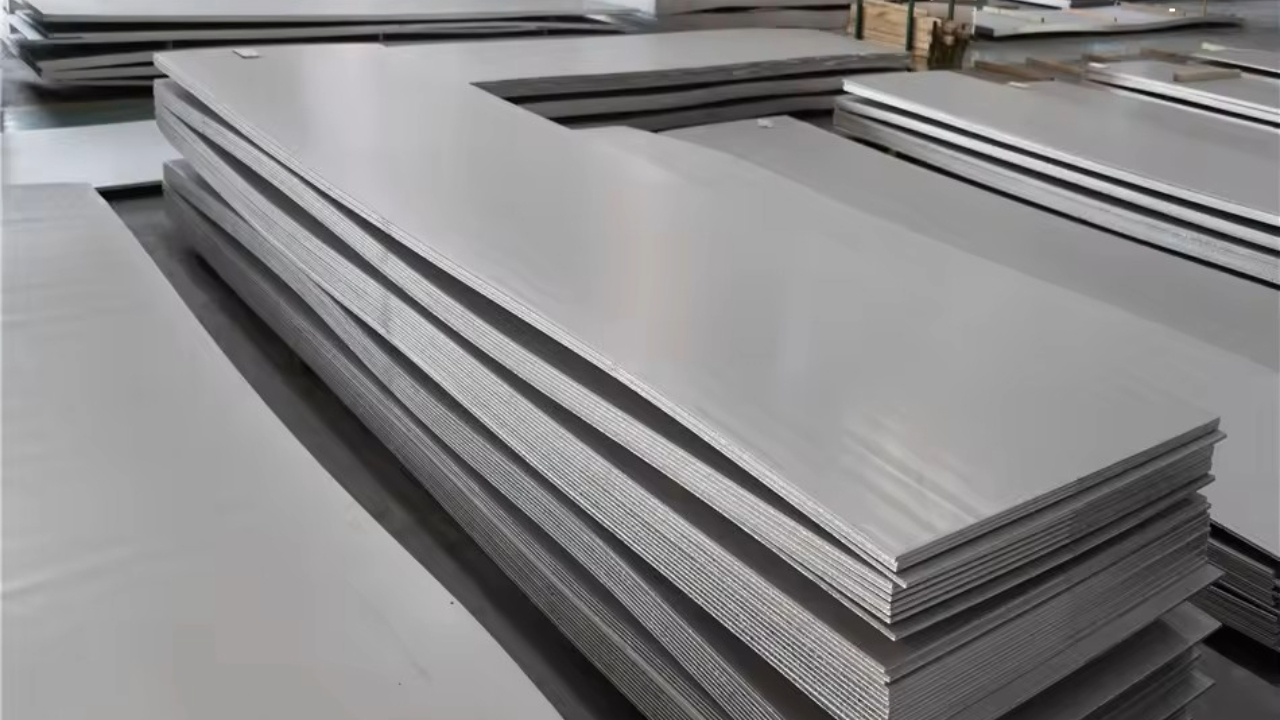
Hastelloy Plate
Hastelloy plates are flat-rolled alloy products used to fabricate vessels, linings, ductwork, and components exposed to corrosive processing environments. These plates are known for their excellent workability, allowing them to be easily cut, welded, and formed into complex shapes without compromising corrosion resistance. Their large surface area and structural stability make them ideal for constructing tanks, hoods, tower linings, and containment systems. In environments where chemical exposure is continuous or highly variable, Hastelloy plates provide a dependable barrier against degradation, preserving both structural strength and safety. Their resistance to thermal distortion and environmental wear also makes them valuable in high-temperature industrial zones.
Hastelloy Plate - Specification Table
| Parameter | Details |
|---|---|
| Manufacturing Standards | ASTM B575 (Nickel Alloy Plates and Sheets), AMS 5542 (Hot Rolled and Annealed) |
| Material Grades | C-4, C-22, C-22HS, C-276, C-2000, B, B-2, B-3, G, G-2, X, N, W |
| Thickness Range | 1.5 mm (0.06") to 150 mm (6") or more, depending on grade and size |
| Width Range | Up to 2000 mm (78.7") or customized |
| Length Range | Up to 6000 mm (236") or customized |
| Surface Finish | Hot Rolled Annealed, Pickled & Passivated, Mill Finish, Polished |
| Mechanical Properties | Supplied solution annealed for optimal corrosion resistance and mechanical strength |
| Heat Treatment | Solution Annealed and Stress Relieved (if required) |
| Dimensional Tolerances | As per ASTM B575 and AMS 5542 |
| Typical Applications | Chemical processing equipment, pressure vessels, heat exchangers, corrosion-resistant linings, pollution control equipment |
Key Feature
| Key Feature | Description |
|---|---|
| Corrosion Resistance | Excellent resistance to a wide range of aggressive media, including acids and salts. |
| High Temperature Resistance | Capable of withstanding high-temperature environments (up to 1000°C). |
| Strength | High strength and durability even under harsh conditions. |
| Weldability | Excellent weldability due to its low carbon content, minimizing carbide precipitation. |
| Machinability | Can be easily machined, though requires high cutting speeds and tools to avoid work hardening. |
| Formability | Good formability at room and elevated temperatures. |
| Versatility | Suitable for chemical processing, aerospace, and power generation industries. |