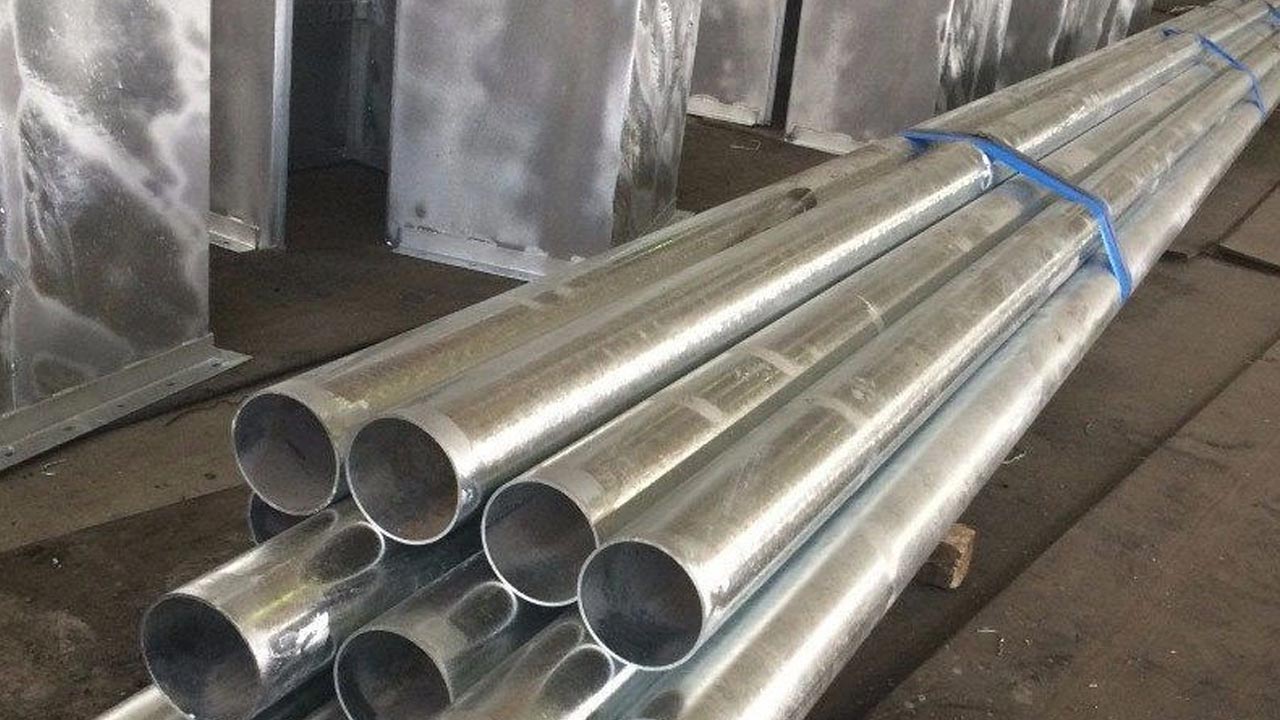
Hastelloy Pipe
Hastelloy pipes are engineered for transporting aggressive fluids and gases under extreme conditions, including high temperatures and pressures. These pipes are designed to resist corrosion in both oxidizing and reducing environments, making them ideal for use in harsh chemical processing systems. Their seamless or welded construction ensures high structural integrity, minimal risk of leakage, and reliable performance in pressurized systems. Common applications include acid production units, waste treatment pipelines, and reactor feed systems where consistent corrosion resistance is critical. The uniform wall thickness and dimensional accuracy of these pipes also contribute to their efficiency in heat transfer and fluid dynamics.
Hastelloy Pipe - Specification Table
| Parameter | Details |
|---|---|
| Manufacturing Standards | ASTM B622 (Seamless), ASTM B619 (Welded), ASTM B775 (Annealed Welded), ASTM B829 (General Requirements) |
| Pipe Type | Seamless, Welded, ERW (Electric Resistance Welded) |
| Material Grades | C-4, C-22, C-22HS, C-276, C-2000, B, B-2, B-3, G, G-2, X, N, W |
| Size Range | 1/8" NB to 24" NB (custom sizes available) |
| Wall Thickness (Schedules) | SCH 5S, 10S, 40S, 80S, 160, XXS |
| Length | Single Random (5–7 m), Double Random (11–13 m), Custom Cut Lengths |
| End Types | Plain End (PE), Beveled End (BE), Threaded End (TE) |
| Surface Finish | Bright Annealed, Pickled & Passivated, Polished |
| Tolerance | As per ASTM B829 / ANSI B36.10 / B36.19 |
| Heat Treatment | Solution Annealed (unless otherwise specified) |
| Forming Methods | Cold Worked, Hot Finished |
| Typical Applications | Acid transport, marine exhaust, nuclear piping, chemical process plants, flue gas scrubbers |
Mechanical Properties
| Property | Typical Range | Units |
|---|---|---|
| Tensile Strength (UTS) | 550 – 950 MPa (80,000 – 138,000 psi) | Megapascals (MPa) / psi |
| Yield Strength (0.2% offset) | 200 – 550 MPa (29,000 – 80,000 psi) | Megapascals (MPa) / psi |
| Elongation (in 2 inches / 50 mm) | 30 – 50 % | Percent (%) |
| Hardness | 150 – 250 HV (Vickers Hardness) | HV |
| Modulus of Elasticity | ~205 GPa (30,000 ksi) | GigaPascals (GPa) / ksi |
| Impact Toughness (Charpy V-notch) | Typically high, varies by alloy and temp | Joules (J) or ft-lb |
| Density | ~8.9 g/cm³ | g/cm³ |
Chemical Composition:
| Element | C‑276 | C‑22 | B‑2 | B‑3 | X | N | W |
|---|---|---|---|---|---|---|---|
| Ni | Balance | Balance | Balance | ≥ 65% | 44 – 60% | Balance | Balance |
| Cr | 14.5 – 16.5 | ≈ 22 | 1 – 3 | 1.5 – 3 | ≈ 22% | ≈ 7% | ~5% |
| Mo | 15 – 17 | 13 – 16 | ~28% | ~28.5% | ~9% | ~16% | ~24% |
| W | 3 – 4.5 | 3 | – | ~3 | ~0.6% | ~0.5% | – |
| Fe | 4 – 7 | ~3 – 5 | ~2% | ~1.5% | ≈ 18.5% | ≈ 5% | ≈ 6% |
| Co | ≤ 2.5 | ≤ 2.5 | – | ~3% | ≤ 2% | – | ~2.5% |
| C | ≤ 0.01 | ≤ 0.01 | 0.01 | 0.01 | ≈ 0.1% | ≈ 0.08% | ≈ 0.12% |
| Mn | ≤ 1 | ≤ 1 | ~1% | ~3% | ~0.5% | ~0.8% | ~1% |
| Si | ≤ 0.08 | ≤ 0.08 | ~0.1% | ~0.1% | ~0.5% | ~1% | ~1% |
| P | ≤ 0.03 | ≤ 0.03 | – | – | – | – | – |
| S | ≤ 0.03 | ≤ 0.03 | – | – | – | – | – |
| V | – | – | – | – | – | ≈ 0.35% | ~0.6% |
| Ti/Nb | – | – | – | Al/Ti trace | Nb trace | Al+Ti trace | V trace |